
Energy Materials
Structural Power Composites
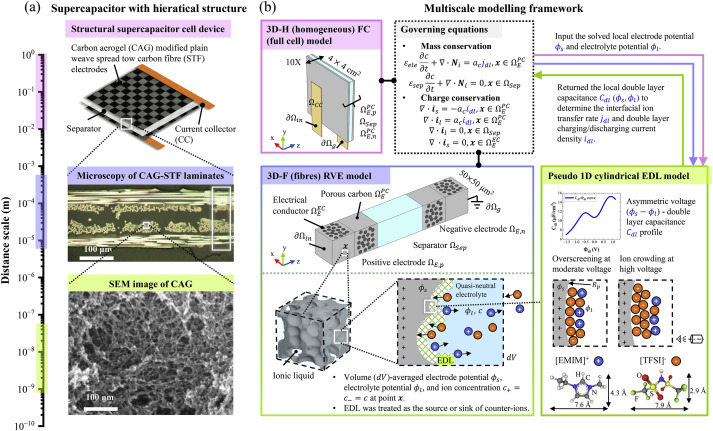
Multiscale modelling of structural supercapacitors
Battery Optimisation
Discovery of next-generation battery electrodes using topology optimization


Pat joined Idea Lab, Department of Aeronautics, Imperial College London in 2021. Her research aims to develop an innovative design framework to elevate the mechanical properties for fibre-reinforced AM, integrating cellular structure and bio-inspired strategies with the objectives to 1) explore and utilise the nature-inspired approaches in design for AM to enhance the mechanical properties, 2)investigate the plastic behaviour and failure characteristics of fibre-reinforced and metallic lattice structures fabricated by AM under dynamic loading conditions, and 3)explore innovative composite manufacturing processes and apply them to create structures for energy absorption. Known for their notable properties such as specific energy absorption and impact resistance, nature-inspired structures like cellular and hierarchical forms have been utilised for Additive Manufacturing (AM). Through experimental investigation, my objective is to explore structural design options and material variations, such as composites, to enhance energy absorption during a crash and thereby expand AM capabilities through innovative design. This work also seeks to provide insight into the dynamic behaviour of AM parts and broaden the adoption of AM in crashworthiness applications.
Bohan joined Idea Lab, Department of Aeronautics, Imperial College London in 2021. His research focuses on 1) investigating the effectiveness of ML-based techniques in generating designs for AM, 2) realising the transformation of ML from black-box to grey-box with scientific machine learning approaches, 3) developing ML-based methods alternative to the current numerical AM simulation methods that are less time-consuming, enabling the subsequent design optimisation that is manufacturing-aware. One main endeavour for realising the goals of the project is shifting the ML methods away from the traditional ‘black-box’ nature. The application of the ‘physics-based machine learning’ (PBML) concept is identified as a viable means for the objective. In addition to the development of physics-informed machine learning models, another focus is the integration of trained ML models with traditional numerical methods to leverage the strength of both techniques for multi-scale, high-fidelity, and rapid simulation as well as design optimisation.
Ck was a Research Associate at the Materials department of Imperial College London. His research revolved around multiscale design of architected materials. These are materials which derive their functional behaviour from the microstructures they are comprised of. Some interesting applications of such materials are in the design of bespoke bone implants and aerospace grade structures. He demonstrated that novel lattice structures based on the mathematics of aperiodic order have the capacity to outdo their rather ubiquitous periodic counterparts. Ck also applied his expertise in multiscale optimisation to derive nanoscale topologies for state-of-the-art insertion electrode batteries such as Li-ion, Nickel Metal Hydride and Sodium-ion batteries, further improving battery performance (energy and power densities) as well as battery life-time.
Ck is currently a lecturer in design optimisation at University of Manchester.
My investigation focused on applying Machine Learning (ML) in Design for Additive Manufacturing (DfAM), especially in Design of lattice structures. Lattice structures are architectures constructed by spatial periodic cells. The controllable shape and size, the high strength-to-weight ratio, and the tuneable mechanical properties have brought lattice structures greater attention. I’m trying to seek for sophisticated lattice generation methods which could use ML to enhance the structural performance. I believe that lattice structures can approximate the high performance of Topology Optimisation (TO) design, but shrink the time required for generating high-resolution structures. Recent work applying ML-based lattice inverse design to functionally-graded lattice generation is published in AM journal (doi:10.1016/j.addma.2022.103238). I’m now looking into exploiting multi-functionality of lattice designs and lattice-based compliant mechanisms. Further investigation into lattice behaviour under plastic deformation is also expected to help improve lattice energy absorption capability.
John’s project spanned the design, manufacture, and operation of custom-made vacuum cold spray system for in-space manufacturing and repair, and was funded by the UK space agency (UKSA). Cold spray additive manufacturing (CSAM) systems are already being used on Earth for additive manufacturing and repair of metal components under atmospheric conditions. This project evaluated the feasibility of CSAM for in-situ (in-free space) repairs of spacecraft components, demonstrating expertise in computational and experimental methods to enable CSAM. It also enabled translation of low-TRL research from university to industry.
Rachel’s research project was on designing, developing, and demonstrating a cold spray additive manufacturing device for in-space applications.
Cold spray additive manufacturing systems are already being used on Earth for 3D printing of metal components under atmospheric conditions. By developing a cold spray system that can operate under high vacuum conditions, and by demonstrating successful operation within a high vacuum environment, the applications of this type of technology will be broadened to include in-space operation, thus, allowing for in-situ repairs of spacecraft. This will help to increase the lifetime of spacecraft while reducing the repair mass requirements by using a material that can be sprayed into the required shape instead of carrying a variety of specific components.
Rachel is currently a research fellow at Univerity of Surrey.
I like to study polymer material with a BSc in polymer and a MSc in composite science and engineering, respectively. Now my PhD research interest is additive manufacturing of fibre reinforced polymers (FRPs) and investigation on their mechanical performance. Additive manufacturing attracts increasing attention as it develops from fabricating only prototypes to manufacture engineering components. However, the mechanical performance of additively manufactured parts still needs improvement and more relative research efforts are needed. My current study is investigating factors influencing the mechanical performance of FRPs by experimental characterisation. I like to use characterising technologies to analysis the structure of additively manufactured FRPs and investigate how the structure influences the mechanical performance.
With a B.Sc. in Sports engineering from the Technical University Chemnitz and a M.Sc. in Composite Materials from Imperial College London, my background is in mechanical engineering and material science. Being a passionate climber, runner, and golfer, I have always been fascinated by the technology and materials used to develop better performing and lighter equipment. With the PhD research into additive manufacturing of composites, I had the opportunity to work on lightweight structures that have potential applications in this field. Furthermore, I am fascinated by the immense potential of additive manufacturing, transforming the way we design products and offering new and exciting solutions. After having collected significant experiences in the experimental testing of materials (polymers, metals, and ceramics), the motivation for this research also stemmed from the desire to expand my knowledge in the numerical simulation.
János is currently working at Ansys.
Chanhui joined Composite Centre and Dr Ajit Panesar’s research group at Imperial College London (ICL) in April 2017, where he focused his research on ‘Design, Characterisation and Application of Structural and Multifunctional Composites to Large Ship Structures’. During his PhD, he enjoyed numerical and experimental investigations for design, optimisation and validation of multifunctional composites under the great guidance of Prof. Emile S. Greenhalgh (the Head of Composite Centre at ICL) and Dr Ajit Panesar (the Head of Idea lab).
Chanhui is currently working as a senior research engineer in the Innovative machinery system research department at Korea Shipbuilding & Offshore Engineering (KSOE) in South Korea. He es focusing on the innovation and development of mechanical systems in marine and offshore structures.
More recently, he has been promoted as the head of the Innovative machinery system research department, and he is, therefore, trying to build a cooperative research relationship with IDEA lab and Composite Centre for successful collaborations in near future.
Research Aim: Development of neural operator methods for simulating thermo-mechanical behavior in metal additive manufacturing (MAM).
Neural operators offer superior generalization across varying input conditions compared with conventional neural networks. When integrated with physics-informed loss functions, they enable data-free training by embedding governing physical laws into the learning process. This study aims to develop a model capable of generalizing across multiple factors, such as geometry and material properties, while accurately predicting temperature and stress fields, ultimately supporting efficient optimization-driven design and analysis.
Something more about me: I enjoy traveling and exploring historical sites, and I hate celery.
Research Aim: To study and experimentally characterise gas flows and their influence on part quality in laser powder bed fusion printers.
Repeatability of part quality is one of the biggest challenges faced by the laser powder bed fusion manufacturing process. High demands for part certification in industries such as aerospace require a mature understanding of the complex phenomena occurring during printing and their influence on the quality of the part. The gas flow system is one particular component where current knowledge is very limited due to the many challenges posed by the printer environment in terms of data acquisition. However, the influence of the gas flow is undeniable and has been noted numerous times in literature due to its effect on spatter redeposition and removal of process by-products. Creating a method of in-situ flow characterisation and investigating improvements to the gas delivery system are, therefore, crucial steps in the evolution of laser powder bed fusion.
Something more about me: I am very passionate about music and games.
Research Aim: Optimization of laser wire additive manufacturing processes and topology.
My research is optimzing laser wire additive manufacturing (LWAM) processes and topology. There are many constraints and competing objectives that need to be considered to produce large-scale, manufacturable parts using direct energy deposition. The interaction between the laser and metal is partially understood, affected by temperature, size, speed and shape – in turn defining deposition. This covers everything from the grain structure, residual stress to surface roughness and deformations due to thermal histories.
Something more about me: I enjoy cycling up mountains across Europe.
Research Aim: Develop a topology optimisation method to design multifunctional metamaterials.
Metamaterials have attracted interest due to their outstanding properties across various fields, such as mechanical, thermal, electromagnetic and acoustic. Those properties are realised by underlying architectures of metamaterials. Controlling the micro-architecture in a multiscale metamaterial opens the possibility to fulfil multifunctional applications. The study aims to advance on the ML-based method by extending the geometry space to include 3-dimensional (3D) unit cells and caters for material anisotropy opening the opportunity to utilise fibre-reinforced additive manufacturing (FRAM).
Collaboration / sponsor: Asahi Kasei Corporation.
Something more about me: I enjoy exploring new locations and cuisines.
Research Aim: Development of multifunctional hybrid shape memory polymer nanocomposites.
In aeronautics, shape memory polymer nanocomposites are crucial for morphing structures, requiring reinforcement with carbon nanofillers for effective electrical actuation. Their 3D printability allows for complex, customizable designs, suitable for advanced technological applications. Multifunctional hybrid 3D-printed shape memory polymer nanocomposites can be engineered by combining thermoplastic polyurethane (TPU), carbon nanotubes (CNTs), and graphene nanoplatelets (GNPs). These nanocomposites leverage the shape memory properties of TPU, enabling them to return to a predefined shape upon heating. The incorporation of CNTs and GNPs enhances mechanical strength, electrical conductivity, and thermal stability.
Something more about me: I enjoy exploring new locations and cuisines.
Research Aim: Computational design of functionally graded materials (FGMs) with machine learning (ML) techniques.
FGMs enabled property / performance control by spatially varying the design of microstructures. Recent development in multi-material additive manufacturing (MMAM) expands the design freedom by allowing control over both geometric parameters and material compositions. However, computational efficiency and flexibility in incorporating diverse engineering objectives become challenges in traditional numerical methods. Therefore, my research will follow a data-driven approach, exploring various ML techniques to facilitate the design of FGMs in aerospace/biomedical applications.
Something more about me: always enchanted by sunsets.
Research Aim: Development and demonstration of structural power composites that simultaneously store electrical energy and carry mechanical loads.
Structural power composites are devices that allow radical weight savings for any electrically powered structural system, from mobile phones to aircraft. The focuses of my study are on scale-up and multifunctional design with structural supercapacitors, with a particular focus on optimizing current collection and multifunctional constituent, as well as developing multi-scale multi-physics models for the entire devices. Both experimental studies and numerical simulation are involved within this study, the aim of the latter is to develop new strategies and multifunctional design tools for adopting structural power in future applications that can fully exploit their benefits.
Something more about me: Member of Imperial Kendo Club, enjoy hiking and music shows, plan to start indoor rock climbing.

Ajit is an Associate Professor (Reader) in Computational Design for Advanced Manufacturing at Imperial College London, with a leading track record in additive manufacturing, topology optimisation and ML (incl. Scientific ML) and architected materials. He has authored the “Simulation-Driven Design” chapter for the ASM Handbook bridging the gap between research and practice, and contributed to over 60 publications, with several making it to the most downloaded/cited list. He co-leads the “Theory, Modelling and AI” SIG within the EPSRC UK Metamaterials Network, and led the “Computational Tools” theme in the EPSRC DfAM network. Ajit is actively engaged in multiple collaborations aimed at advancing the state of the art and delivering tangible impact across a wide range of sectors. He has successfully secured research funding from both research councils and industry partners to deliver on his research vision. Importantly, he is extremely grateful for all the support he receives – from the members of IDEA lab, his colleagues/collaborators, mentors, funders and the wider community!
Something more about me: loves to solve puzzles and is trained in a few martial arts (Brazilian Jiu Jitsu, Wing Chun).